05 May 2015

Language Training Center

I have been in China close to six months and I have yet to describe what I am doing here.  Believe it or not I am doing more than just travelling, meeting interesting people, and seeing some beautiful places.  In order to afford all of these various trips some described on here and others I still have yet to talk about I do have a job here in China.  In fact most of my time during the week is spent in the role of being an English teacher.

Here in China I am working at a language training center and this is significant because it is different than any other job I have had anywhere.  In Korea I was in a public high school while in Yemen I was working at a college teaching young adults.  Well here in China a language training center is basically an added school that students gladly go to willingly, where the parents give them an option, and the students are all there for their love of learning English (this last sentence should be read in a sarcastic manner).  That last sentence isn't exactly true and instead these schools also have some interesting nicknames for them that are more fitting: weekend school, hagwon (for my Korean readers), test preparation school, and cram school. So this type of school isn't for the lower class people because it does cost a pretty penny to go to classes, and so that means most of my students are from the more privileged people in the community. Of course at every school there are going to be students who genuinely do want to be there and are interested but that isn't the overall case at my school.  All of these factors do make for an interesting setting and classroom environment.

There are a lot of levels and ages of students that I do teach.  My youngest students are 6 years old and then I have the older students of around 15 and 16 years old.  The school does take students starting from 4 years old but luckily I haven't had any of those classes yet.  Our busy work days are on Friday, Saturday, and Sunday with Saturday and Sunday being at school from about 8:00 a.m. till 6:00 p.m.   The curriculum is broken down into three different groups depending on the students age. K level, F level, and then S level.  My lowest level is the lowest F level book and then my highest level is called S-Max.  My S-Max class doesn't have a book and instead requires me to make up my own lessons each week.  This class is the highest at the school and their English level is pretty good.

The students have 3 sections of class with the classes going 40 minutes, 5 minute break, 40 minutes, another break, and then a final 45 minutes.  Besides the foreign teachers there are also Chinese English teachers too. So it does depend on the level but in general from F5 and up the students get at least two sections with a foreign teacher and the last section with a Chinese English teacher.  When the students are with the foreign teacher the Chinese teacher is in the classroom too and so I do use them for examples in order to explain activities and to help monitor.  Only exception would be my S-Max class where it is just me and the students but it is fine because I have gotten real good at explaining things multiple ways. Each week in each respective classes the material is the same irregardless if it is the foreigner teaching or when they are with the Chinese English teacher. So in reality it is a lot of repetition and that does mean there is a lot of time to fill with various activities.  This does mean we do play a lot of activities of course using English but to mainly keep the students attentive and interested.  Depending on the level of the students and the class chemistry some activities work better than others and so it can be fun finding what works and doesn't work.

The Chinese English teacher's all studied English at university usually majoring in Business English. Since they all went to different universities there level of English does vary but all are hard workers who do enjoy teaching. It isn't uncommon for them to come to us foreigners (there are three of us total) with questions usually about pronunciation of words. This of course can be interesting because one of my foreigner co-workers is from Ireland and so she grew up on British English which does have different pronunciation at times. The Chinese staff do usually prefer the American pronunciation which is where the rest of us are from, at least in Jining. Plus the Chinese staff do help a lot when we have parent meetings and the graduation ceremony. Also outside of the classroom environment they do help us if we need to go to the bank to open an account, go to a doctor, or basically anything we might need help with translation. The first month or two I used them a couple of times for various tasks but now I can do it myself because my Chinese is fine for communication. The person from Ireland on the other hand is horrible with Chinese and so she does rely on the Chinese staff a lot more than the rest of us. Plus the greatest thing is they are my Chinese teachers. I have Chinese class every week for twelve hours and I do have lessons from almost all of them. Soon I should write a post of how my Chinese is coming along and how my Chinese classes work.

Besides the weekend classes our school does have a couple other contracts at other places. One is a local kindergarten and so everyday from Monday- Friday they have a foreign teacher at their school from 9:00 a.m.-11:00 a.m. Those students I think range from 3-7 years old. Those classes are very interesting and can be crazy. Also there are two businesses where we do teach adults English. I did have most of those classes during the week because I am the one with experience teaching adults unfortunately one of those companies didn't resign because there business is running slow. I do really enjoy the adult classes especially because it is completely different from the weekend classes.

I think that does pretty much describe of what my job does entail including some different numbers. A quick little explanation on why people in China, particularly the students have so much English.  It is mainly because it is on their main test. Talking about China's education system would require a lot more typing and would be hard to explain because how different and unique it is from the American education system. Main thing to know though is at the end of high school everyone takes this huge test that does have a huge effect on them for the rest of their lives. It is mainly used for college admission but is strictly followed and with a bad score impossible to get into a college. On this test English is actually one of the bigger sections and so students do need to know it. Of course this does mean that grammar is a huge part of that section and conversationally students aren't the greatest if they only study English from their public school. That is one thing I always make sure students realize when I am teaching with them is if they can answer questions without sounding like a robot and have conversational like answers. Seems like an easy concept to get the students to follow but with China's education system that isn't the case.

Anyway like I said I could go into a lot more details but by now I am sure everyone is bored with this post. This week I decided to stay in town and not travel. The two weeks prior I was out of town both times to different locations and so those might be a future post. Plus I do have some trips in mind to take before the summer rolls around. The rest of today I am going to do some studying for my Chinese class and try to find new pedals for my bicycle. I bought a second hand bicycle about a month ago and it has been great in this spring weather but a couple of days ago one pedal broke. Not that big of a deal and after only spending 400 yuan ($65 dollars) on the bike it doesn't surprise me I would have to fix something eventually. I will write later.    

10 April 2015

National Park

Not too long ago I was in an area of China where I was expecting to come across a dragon or some huge monster.  This past weekend I was able to get to a different location but this time it was possible to run into something not from Earth.  This place is known as Zhangjiajie.  It is a little ways down south to get there but luckily I had three days off this last week.  The reason for the extra day off is because of a holiday known as Tomb Sweeping Day which is simply a day to show respect to ancestors.  With this extra day I was able to make a further trip away from where I live.

After an overnight train and two buses later I ended up in a smaller town called Wulingyuan.  This was my destination because it is one of the entrances to Zhangjiajie National Park.  This particular park is known as China’s first national park and is a giant expanse of some interesting scenery.  This park is located in Hunan providence which is two providences south of Shandong providence where I live.  Since it is further south it does have a different type of climate.  The park is located in a subtropical climate and it was actually cooler down there than up north where I live.  Now this could be the combination of the higher elevation in the mountains and the rainy weather.  The park itself is broken up into five scenic areas called Huangshizhai, Golden Whip Stream, Yaozizhai, Yuanjiajie, and Yangjiajie.  Before talking about the park itself I want to describe my first day’s activities up in Wulingyuan. 

Wulingyuan is actually a part of Wulingyuan scenic area which according to zhangjiajietourism.us consists of three parts: Zhangjiajie National Park, Suoxiyu Nature Reserve, and Tianzi Mountain Natural Reserve.  With the two days I had down there I spent most of my time seeing these parts and that is because I thought this would be the best route to see the most.  After arriving in Wulingyuan I headed directly to Huang Long Dong.  This translates to Yellow Dragon Cave which is a typical Karst cave, an area of irregular limestone in which erosion has produced fissures, underground streams, and caverns.  It is the biggest cave I have been in. There was a lot of colors inside but some of that was due to the addition of lights.  It was neat to see the different shapes of the limestone that has been created.  Plus taking the boat through the cave for a little bit was neat.  After the long day of travelling and not arriving till later in the afternoon by the time I finished the cave it was close to six at night.  This meant no visiting Zhangjiajie park that day.  After finding some accommodation and eating dinner I went to bed to rest up for the early start the next day. 

The next day I was at the ticket office shortly after it opened at seven o’clock.  My original plan was to do Tianzi Mountain firth then go to Yuanjiajie.  It didn’t work out that way and that is because after seeing where the free shuttle busses could go that wasn’t an option.  These shuttle buses take you to the start of a trailhead and usually at the end of that particular area there could be another bus to take you somewhere else.  This is nice for the size of this particular park but unfortunately China has made a lot of places too touristy by adding steps, busses, cable cars, and other random unnecessary things taking away from the natural scenery.  Anyway, so I ended up going first to Bailong elevator, hoping at the end of this there would be a bus to Tianzi Mountain.  This particular elevator is built onto the side of a huge cliff and does claim to be the tallest glass elevator.  Going up this elevator you get to look out and see the mountains.  This is where I could slowly start to see where I could run into some extra-terrestrials.  Once at the top of this elevator the view was neat and with the rainy and cloudy conditions it did add a unique feeling.

The bus after the Bailong area took me to the Yuanjiajie area.  At this point in the day it was raining and thee was a lot of fog floating around.  The fog did add an interesting trait as if I wasn’t on Earth anymore but the fog did also abstract the view.  One neat thing was standing on a viewing platform and only seeing fog and then all of a sudden with help from the wind the fog was cleared to reveal the Karst mountains.  The fog didn’t stay gone for long and within a minute the view was gone.  So going along this area there are quite a few viewing platforms with a some sort of view, unfortunately the weather at this time wasn’t the greatest.  Some of the names of the more well known views in this area includes Back Garden, Mihun Stage, and First Bridge under the Sun. 

After making it to the end of this area the next bus took me to Tianzi Mountain which is the original destination I wanted to see first.  About a forty minute bus ride later I was on top of Tianzi Mountain.  Up here there were some more lookouts with neat names such as Imperial Brushes, floral tributes by fairies, and some other names.  These look outs have these names because without cloud or fog obstruction the mountain do look like the various names given them.  If I was thee at the right moment the fog would somewhat disperse getting a picture opportunity and shortly after no visibility.  This area was somewhat of a letdown because I thought these was more to see.

Next I was trying to get to the western side of the park in order to see the Golden Whip Stream.  That was my plan of attack but it didn’t end up happening because the shuttle buses are hard to navigate.  Instead I ended up back at Yuanjiajie not realizing that the first time I was there it was named that.  I went in a different route and everything looked a lot different, and this is because the rain had stopped and it turned into a clear day.  So without planning it I saw you could say ‘before and after pictures’ of the same area.  So I quickly went through and took some more pictures.

I tried a different route to try and get to the Whipping Stream, and again with no luck this time I ended up at a place called Ten Mile Gallery.  It’s not a ten mile hike but instead only 5.8 km long.  Along this path the mountains are closer together making more range like mountains instead of individual unique mountains sticking out.  Plus towards the end of this little route I saw some monkeys.  I have no clue what type of monkeys but they were pretty neat.  The end of this there is a path up that leads to the top of Tianzi Mountain and so I went up a little ways to the first platform with a view.  After this I had to make my way back the same way through the Ten Mile Gallery in order to leave the park.  I ended up leaving the park around 5:30 in the afternoon having seen pretty much everything I could reach from the Wulingyuan entrance. 

This is one place I do hope to get back to see again and instead go in a different entrance.  The chance to see the Golden Whip Stream and a few other key spots would be neat and possibly with better weather.  I was able to see the spots that make it unique and what people picture when they hear Zhangjiajie.  This is the Karst mountains with the unique shapes.  If you remember back my first encounter with Karst mountains in China was in Yangshou where I was expecting a dragon.  This blog I have been referencing aliens and that is because of something James Cameroon said about Zhangjiajie.  He basically said Zhangjiajie was one area where he did get his inspiration when creating his world for Avatar.  So it easily could have been possible that the aliens were using the fog to keep their identities hidden.

I am currently writing this on the train heading back home.  I have about eleven more hours to go but luckily I have a bed to get some sleep before work tomorrow.   I plan to type this up tomorrow and sort through the pictures to post {*it took two days to get the pictures and words together}.  Plus I am going to look at the weather forecast so hopefully on my next weekend (Monday and Tuesday are my typical days off) I will be hiking a famous mountain.  The mountain is located in my providence and so not long to get there.  Even with the rain and fog this trip it is spring time and so great weather to do some travelling, hence why I have been out of town a lot.  I will write later. 


30 March 2015

Xīnnián kuàilè!

So the Chinese New Year has come and gone which means it is back to work as usual, but without giving an account of the biggest holiday in China would make me a bad traveler of China.  Chinese New Year doesn’t fall on the same day of the Gregorian calendar but instead the same day of the lunar calendar. It is now the year of the Goat according to the Chinese zodiac signs.  There are 12 different animals (rat, ox, tiger, rabbit, dragon, snake, horse, goat, monkey, rooster, dog, pig) that each one has a year for that particular animal.  The origin of these animals is folk lore and so there are various different stories but pretty much all the stories have a couple things in common.  Each story had some sort of race and these twelve animals were the first ones to complete the race. 

The holiday in China is known as Spring Festival and it does involve various different activities over about 23 days.  Typically there are about seven official days off according to the government starting right around the actual day of the New Year.  During this time almost everyone is off of work and goes home for the festivities.  Going home does mean heading to smaller villages outside of the major metropolitan areas.  This phenomenon has led to the largest human migration in the world that happens every year and even has a word for this migration: ‘Chunyun.’
 
Before the actual holiday there is some preparations that needs to happen for it to be a good year.  Cleaning their homes is definitely a part of this process.  Also decorating the home for the festival is extremely important.  Red posters are posted up on doors with poetic verses on the posters.  Also hanging up lanterns is a common thing to do, especially in the north. This decorating isn’t just for the house but also around the city.  Before the holiday began my city did hang up stuff around the public squares and in some trees that lined a couple of the roads.
 
People try to be home for Spring Festival Eve because this is an important night.  Since everyone is home a big meal is prepared.  Then this is the night that everyone stays up till midnight waiting for the New Year to roll in and when that happens everyone can hear it. Just today around noon, I heard some fireworks going off right outside my window.  No it isn’t Chinese News Years anymore but having fireworks go off in the middle of the day is quite common in China.  They usually are celebrating something but it doesn’t have to be that big of a celebration; however, on New Year’s Eve there are tons of fireworks that go off.  It was so many that after ten minutes all I could see was smoke and no more fireworks.  Here anyone can shoot fireworks and there isn’t really a big show put on by the city or anything of that nature.
 
On the first day of the New Year it is simply a party all day long.  I heard up in Jining (I was down south in Yangshou) near a big public park there were a lot of carnival type games and activities.  I didn’t see anything like that down in Yangshou.  I think it still is a day to catch up with family and old hometown friends.  One thing that most people do up north is to eat dumplings on New Year’s Day.  While in Yangshou I was able to make some dumplings on New Year’s Eve at the hostel I was staying for the night.  It is harder than it looks to make but they turned out pretty good.   Another item to eat on New Year’s is some sort of fish. With the fish dish though you aren’t supposed to finish it and instead leave some.  This is because the word for fish ‘yu’ also could mean ‘surplus.’ These words have different Chinese characters but are pronounced the same which happens quite a bit in Chinese.     

One neat thing that I was able to see that doesn’t happen all over was a lion dance.  I showed one of my Chinese co-workers pictures and she said that she had never seen a lion dance.  These individuals carried around two longer costumes that looked like a lion.  Two people were under the lion at one time and they would move together to make it do some actions that a lion does.  Meanwhile a cart was following the lions and was being played along with some cymbals. These two lions would dance in front of a store eventually making their way into a store until the climax of the music would happen and then both lions would bow. Next they would make their way out of that shop and go into every single shop doing the same type of music beat and with the bowing.  This whole performance is to pray for good luck and good fortune for that store.  This is because the lion is an animal that is believed to bring good luck.
   
With the holiday being so long (around 23 days) there are different things that need to happen on specific days.  I don’t know that much detail about the rest of these days and besides it is smaller days because most people are back at work after about seven days off.  One of these days that I will talk about that was real neat to participate and see it first hand is Lantern Festival.  The Lantern Festival occurs on the first full moon of the New Year.  New Year itself is on a new moon and so usually the Lantern Festival is about 15 days later.  It is hard to trace down the origin of this festival.  In modern times though, after work people gather to take part in different activities that vary regionally.  Some of these activities include lighting lanterns to let them go, setting off fireworks, guessing riddles written on lanterns, and possibly dragon dances or lion dances.  Here in Jining that night a friend and I went out to an area near a lake.  This is the main area for people to go in Jining and there were tons of people out there.  After getting out of the cab we walked for a long time but while walking we saw the lanterns floating in the distance.  Eventually we were still walking and the lanterns were above us and it was pretty surreal.  After making it to the main area we ended up buying a couple lanterns and did set them off there and also back on the roof of our apartment.  It was a fun night.

So in a nutshell that is some things that do happen during Spring Festival.  A couple times I did mention what happens in the north or the south and that is because China is a huge country with different traditions depending on the region.  Plus for the seven days off I was in the southern part of the country but I do actually live in the north, and so I was able to see some differences for the short time I was down south.  I had planned to post this account earlier but I did get caught up with planning and taking a couple more trips.  A couple weeks ago I went to both Nanjing and Suzhou while this last week I was up in Beijing.  The weather is really nice now and so it is a great time to travel and see some places.  I will write later.


Preparation for Spring Festival in Jining


Posters posted along the doors of shops


Selling fish out of the back of a truck on the Eve of Spring Festival

Notice the fish found down south alongside the lanterns


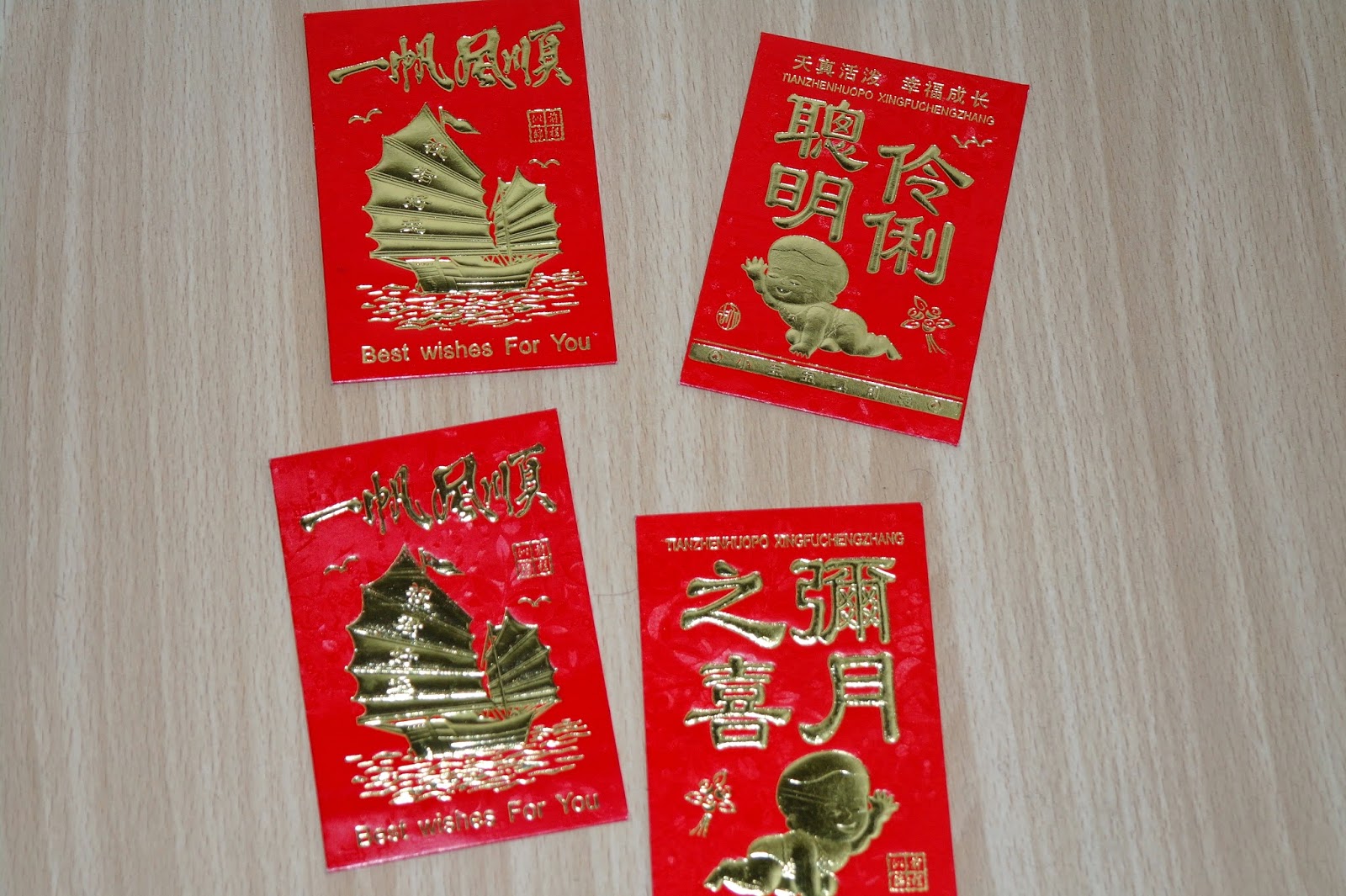
Another tradition of giving money to kids in red envelopes during Spring Festival


Hard to get a good picture of how many that are actually floating above


02 March 2015

Guilin shan shui jia tian xia

You feel the bus making a sudden stop and try not to fall out of the seats.  These same seats that have been used as a bed throughout this longer bus ride than expected.  Looking out the window you notice it is early morning with the sun still yet unseen but daybreak has started giving light to the sky.  Then you notice one giant looking mountain off in the distance. . . then another one. . . one more.  Trying to count these behemoths would be exhausting especially with the lack of sleep.  Besides there is a fog that is floating around and it is hard to make out when and where these structures will pop up.  It’s almost as if there are multiple dragons walking around this new location I have found to explore.  About thirty minutes later I hear the bus driver saying the name of the city I am looking to get off at and start my vacation. 


I have ended up in Yangshou China.  An area that is known for wonderful nature and scenery.  As I am getting off of the bus I am excited but at the same time a little nervous walking around this mystical new land.  That morning after breakfast I travel another 27 kilometers to an even smaller village of XingPing.  Up at this village I see a famous scene that everyone in China knows about and that is because it is the picture on the back of the 20 RMB bill (picture is below).  Plus in XingPing I did take a bamboo raft trip down the Li River to get an even closer view of these “dragon backs” coming out of the ground.  It did rain during that day on multiple occasions which meant the fog and mystical feeling stayed around.


Another activity I did near Yangshou was renting a bicycle and going out looking for the “head of these dragons.”  In reality it was a good ride to see the various small villages intertwined with the unique scenery.  There were multiple fields with different crops, some orange orchards, and these mountains providing a neat background for some pictures.  I did ford the river one time to get along the smaller dirt paths but it would start to rain a couple hours later so it didn’t matter if my feet were dry by that time.
 
One activity that I saw from a distance but is real unique to this area is how the locals fish.  First let me explain that the river is actually clear and can see to the bottom which for China is a rare thing, but even with the clear water I think the fisherman are lazy.  They have trained birds to do the fishing for them!  These birds are called cormorant birds.  So how it works is the fisherman will be out on their bamboo raft accompanied with usually two birds who are his pets. In order for the birds to not eat all the fish it catches the fisherman ties a snare lightly around the bird’s throat. The fisherman coaxes and encourages the bird to go looking for fish and eventually they catch a fish.  Since the bird can’t swallow the bigger fish it swims back to the raft where the fisherman takes the fish from the bird and sends it out fishing again.  Eventually the bird does get rewarded and ultimately for the birds it is a game.  In fact while I was watching one bird found a branch and was playing with it teasing his friend who was on the raft watching him.  Eventually the bird did get back to ‘work’ and found a pretty big fish.  I was lucky enough to see the fishing pretty close without many people around after hiking sometime along the river.  

After spending a few days in Yangshou I did leave this area and headed up north a little ways to an area known as the Longsheng Rice Terraces.  Even though I did leave the “dragons” unseen this area up in the mountains still had a mystical feel.  This is mainly due to the fog that had always been hanging around which again did make it hard to see the landscape at a distance. 


Up in this area there are multiple villages that have various minorities living in them with some unique traditions.  One of these minority groups is named the Red Yao Long Haired Village.  This village is known for how long and dark colored their hair is no matter how old they are.  They only cut their hair one time in their life and after cutting it they don’t throw it away.  Instead they use that hair to tie it up.  A different hairstyle from the females represent the different marital status.  So depending on if you are single, married without kids, or married with kids means how you wear your hair.  While in this village I was able to see a performance where they talked about the different customs and cultures.  Plus as part of this performance I was ‘voluntold’ to participate in a wedding ceremony.  There were four of us on stage (2 Chinese and 2 foreigners) along with the woman of the village going through a wedding ceremony.  It was pretty interesting and the craziest thing that happened was us “newlyweds” danced around in a circle while the other woman were the perimeter of the circle.  As we were going around in a circle the perimeter would be pinching our butt.  This is very common and shows love in the village.  They didn’t say this but I think it is also checking to see if the guy works.  I say this because it is a lot of walking up and down in the terraces for working and so someone who does this daily would have a fine tuned gluteus maximus.   

So besides getting “married” I spent that day and the next day exploring the different villages and different rice terraces.  I ended up sleeping at a village real close to the top of this mountain and was supposed to be an amazing view of the terraces.  Even the next morning the fog was still around and was raining off and on so it was hard to see the vastness of the terraces.  I eventually had to head back to “civilization” and took about a three hour bus down to the town of Guilin, which is the name of a city but also the county where I have stayed these last few days (hence the title of this post: ‘Guilin’s mountain and water scenery is the best under heaven’).  Going along the road I still saw the backs of the dragons (really known as the Karst Mountains) off in the distance and could easily imagine a traveler coming across a few ginormous dragon heads wherever these mountains fade away. 

I took an overnight bus to a bigger city of Guangzhou and after about a fourteen hours was on my train back home.  About twenty seven hours later I ended up back in a city with no amazing view of nature right out my doorstep.  Again this trip was able to happen because of the Spring Festival holidays which I didn’t even talk about in this post.  That is because this post is long enough and more importantly the festival is still somewhat going on and there are more activities planned before the full moon marking the end of the festival.  Once some more of these activities happen I will write about it describing what happened and sharing a couple differences between the different locations I have been for the festival.  For now enjoy the pictures and if you look close enough you might see a dragon off in the distance.  I will write later.       


"Dragons" stalking the city of Yangshou 


cormorant bird bringing back a fish


they keep the black hair color
 by washing their hair with the water that was used
to rinse the rice before cooking


steps leading up to the village I stayed the night

if you didn't want to carry your bag up a local could do it easily


no rice in the terraces now but will be planted in the summer